Tuesday, 13 September 2011

Empowering the Little People


The idea that traditional forms of media are being slowly made obsolete due to the progression in digital technologies has been comprehensively examined throughout numerous tutorials this semester. However, I personally feel there will still be a place for the television, newspapers and other traditional platforms forms alike, in the new multifaceted media landscape. I contend that the digital revolution has not replaced traditional mediums but rather they exist simultaneously, complementing one other, creating an informed media environment.  Alas, audience numbers of traditional mediums may not be as large as they were before the digital revolution - there is no doubt that the digital revolution has impacted our conventional media consumption in a large way - but will the Internet and the digital platforms the Internet creates, consume our entire mediated communication system?

Citizen journalism – a very cool/scary phenomenon.

Why is it cool? I see it as empowering the little people. No longer do you have to be large, powerful corporation to put your thoughts out there, into the public sphere! Weblogs, Twitter, social networking sites and forums are fantastic resources for people to read and discover there own unbiased opinion on all sorts of issues, from the most controversial to the most trivial. If you search for it, you will find an abundance of information, debating each and every aspect of whatever it is you want to uncover.

Though I still feel credibility is a massive downfall. If every Tom, Dick and Harry can publish online, how are we to know that what he or she is publishing is correct? We don’t. This is why I feel digital platforms COMPLEMENT conventional platforms. For example, I found out about the Japan Tsunami through Facebook. I was intrigued, so I searched Google and found an abundance of informative, credible sources – mostly sites that were from a major media corporation (The Australian site for example) as it is widely acknowledged that big, powerful corporations have a the highest journalistic standards and integrity – although this is debatable - thus, social media did not fulfil my entire information seeking desires.

Yet, could there possibly be too much freedom? What if extreme activists start publishing their views, will they get a following? Will this result in riots? Revolt? Perhaps there does need to be some sort of censorship over the content available on the web in order to maintain ideological viewpoints. If ISP filtering is implemented, that will really throw a spanner in the works – so to speak… But that is a whole other blog topic!

There is no doubt that the media sphere is changing. Audiences are fragmented, actively searching for information, interacting online, providing feedback and creating their own content – all of which should most definitely be recognised as a major adjustment in terms of media consumption.  But to say that this will completely replace traditional forms of media, I feel, is a extreme statement. The Internet may attract higher numbers, especially as our generation ages, but there will always (at least for a long time to come) be a television blaring in the background of your morning breakfast routine or showcasing the football game through a projector at the pub on a Friday night, don’t you think?

To survive in e-commerce, harness, employ and celebrate the digital revolution.


The long tail concept has so many positive and negative ramifications. Is the birth of the Internet, and the long tail concept good or bad? The death of journalism as we know it is a scary thought for many of those university students majoring in a journalism, some say the increase of weblogs and citizen journalism threatens the credibility of this profession…

"...mass professionalization is an oxymoron; a professional class implies a minority of members" 
(Shirky, 2000)

However, this can be perceived as an exciting notion for those of us majoring in digital communications. As up and coming professionals, we must find a way to harness the shift in the corporate sphere by manipulating our knowledge, degree, and resume to take advantage of the digital revolution and position ourselves in alignment of the approaching opportunities.

The new retail frameworks made available through novel exercises such as electronic distribution, is fantastic for the convenient purchasing of music or e-books as these can be transformed into an entire digital experience. There is little to no delay between time of purchase and obtainment of product, even if you’re shopping at 2am – when traditional methods of shopping would be out of the question. Retailers must understand, employ and celebrate this new form of e-commerce or risk redundancy.

For other tangible items such as clothes and home wears, the Internet provides a much more competitive environment. There is an increase in price transparency… comparing products, brands and retailers is done with ease. Countless forums and blogs are available providing discussions on the best brands and products to buy to satisfy ones needs. For those of us that have a ‘here and now’ attitude, this may not be the best option as shipping time may take away from the excitement of the shopping experience.

Smaller, niche markets can find products appealing to there individual style with ease! This has led to the ‘boom of the indie’ as I like to say. Indie music, art, clothing and films have somewhat shifted the cultural hegemony which mass media once used to have complete dominance over. And from a marketing perspective, the Internet provides opportunities to target advertising efforts effectively and efficiently as new pull methods can be utilised. I feel Anderson's assertion…

"In the tyranny of physical space, an audience too thinly spread is the same as no audience at all" (Anderson, 2004)

… is no longer relevant in the digital age. 

Sunday, 11 September 2011

Convergence - Should Authorities Be Worried?

Jenkins and Deuze outline how in the past we saw a model where a small number of (powerful) media companies were homogenizing culture through there dominance over the means of production and distribution of media content. There was a very clear line between the publics’ role as “consumers” and the medias role as the “producer.” The idea of the public being seen as producers of… or even participants within, the surrounding culture was absurd. Yet, as demonstrated by the image below, technology has developed and media resources expanded over the past several decades and we have seen how everyone – from commercial, amateur, governmental to activists – now have the opportunity to produce and distribute content which serves there own agenda, thus putting forward there own individual mark in the cultural frame (Jenkins, 2004, Deuze, 2007).

Along with this, we see a dramatically fragmented audience. We now have the opportunity to expose ourselves to the content we choose to be exposed to. This implicates the classic media model immensely. Do the traditional mass media forms still exert the power it once had? Does it still play a large role in shaping and framing our western worldviews? There is no doubt the Internet and its blended consumer/producer model lessens the enormous power mass media platforms once possessed.

Furthermore, the proposed ISP filtering could implicate this notion more so. If Australia was to implement Internet filtering, the country will become the first Western democracy to block access to online material through legislative mandate, positioning Australia at a similar standpoint to authoritarian regimes, reminiscent of China and Iran. The lack of transparency about what and why material will be blocked, combined with the filtering’s inevitable transfer of power to those who design and implement its technology, should be concerning factors for many Australian citizens. Although there is content on the Internet that is harmful and undesirable for many citizens, the legitimacy of this censorship is somewhat debatable. Are the authorities attempting to win back the power they had prior to the introduction of the Internet? 

Deuze, M 2007, “Convergence culture in the creative industries,” International Journal of Cultural Studies, Volume 10, Issue 2, pp 243-263

Jenkins, H 2004, “The Cultural Logic of Media Convergence,” International Journal of Cultural Studies, Volume 7, Issue 1, pp 33-43

Monday, 22 August 2011

GOOD ARTISTS BORROW, GREAT ARTISTS STEAL

There is a blurred line between ‘creating original content’ and ‘appropriating past content,’ after all, nothing is original, right?
As Lessig suggests, “Creators here and everywhere are always and at all times building upon the creativity that went before and that surrounds them now. That building is always… at least partially done without permission and without compensating the original creator” (2004).
So is the copyright law an ‘evil’ that is corrupting society and restricting human kind from an abundant development of pioneering technologies, art and culture? Or conversely, is it a necessary law, put in place to ensure the intellectuals and artistic genesis’s of the world are commended for there innovations?
Some say that copyright is a heavy-handed government intrusion into individual freedom to explore our cultural heritage, all in the name of protecting individual freedom to create. Although some degree of protection is good, but it carries heavy costs and collapses of its own weight pretty quickly.
Additionally, others feel that a lot of the anti-copyright enthusiasts are stuck in state of purely wanting to remake their favourites who don’t feel worthy of creating their own stuff. An interesting story by Steve Sailer tells of how the early Rolling Stones just wanted to perform cover versions of American songs, but manager Andrew Oldham kept telling them about how much money there was in writing original songs. So, he locked Mick and Keith in a kitchen until they'd written a song. After they'd eaten all the food in the kitchen, they decided they might as well try writing a song. So they came up with "As Tears Go By."
The debate over intellectual property law is a difficult, controversial topic. By protecting the original creators we are holding back progression into a world of fruitful modernism. But the creators need to be credited for there work. To strike a balance between the two, like so many other government enforcements, is difficult.

Lessig, L. (2004). Creators. In Free Culture: How Big Media uses Technology and the Law to Lock Down Culture and Strangle Creativity (pp. 21-30). New York: Penguin [URL: http://www.authorama.com/free-culture-4.html]

Monday, 15 August 2011

A Novel Sphere of Industry

We have come a long way from Claude Chappe’s invention of the telegraph in 1974. Media has evolved and the Internet has revolutionized the once un-networked globe. This cyber-infected existence has saturated everyday life and impacted the working world in inconceivable ways. There are many additional demands, fresh production forms and altered labor requirements which have evolved in order to support the growth of the information economy. The shift from manufacturing to knowledge demands has had a dramatic implication on the sphere of industry, “these changes are part of a fiercely competitive international environment, marked by an internationalized division of labor” (Bradwell & Reeves 2008:26).
As Zygmunt Bauman attests, we are all living a “liquid life,” which is “a precarious life, lived under conditions of constant uncertainty” (2002). This uncertainty is created because of the consistent technological developments, bringing the need for continual re-schooling of skills, allowing one to navigate  through a series of temporary working arrangements. The idea of settling down into a comfortable role, with a mundane, repetitive task is not as common as it once was. The world is transforming and as an employee, one needs to transform with it, or risk redundancy.
“Our only shared condition increasingly seems to be the lived experience of being “permanently impermanent” in the context of consistent change”  (M. Deuze).
So I ask the question, should this be negatively looked upon as the end of comfort and stability? Or should this be perceived as an opportunity for individuals to extend knowledge, obtain new skills and transform with the course of their working lifetime. Gone are the days of tedious, repetitive labor, lets welcome this novel form of vocation and celebrate the opportunities that it brings.
Deuze describes “liquid life” as the convergence of the modern categories of production (work) and consumption (life) and the trends this has created which have been a result of the mass populations continuous and concomitant engagement with media. Also termed “presence bleed” by Gregg, “where the location and time of one’s labor becomes a secondary consideration to the task of managing the expectation and/or possibility that one is available and willing to work.” The development of equipment that permit citizens access to work outside the workplace produces an omnipresent possibility to carry out work based activities in unpaid locations. Does this arise from the desire to express a greater level of commitment to ones work because of the not long competitive workplace? Or have these actions and values been instilled within the technological savvy generation?
Younger people, like myself, have grown up with the idea of multi-tasking as a norm. People used to engage in a face-to-face conversation with complete attention being driven into that one singular experience. Today, one can engage in social-networking, watch TV, managing online bank accounts, complete uni work, send and reply e-mails and respond to questions from nearby friends and family– all simultaneously. These skills will undoubtedly be carried through to our working habits. That’s not to say that the increased workloads employees are now expected to undertake should go unrecognized.
“…exploitation becomes less material and more psychological” (Mills, 1973:110)

Bradwell, P., and Reeves, R. (2008) Economies. In Networked Citizens (pp. 25-31). London: Demos.
 [URL: http://www.demos.co.uk/files/Network%20citizens%20-%20web.pdf]

Gregg, M. 'Function Creep: Communication technologies and anticipatory labour in the information workplace'.

Deuze, M. 'Liquid Life, Convergence Culture, and Media Work'. [URL: https://scholarworks.iu.edu/dspace/bitstream/handle/2022/3343/Liquid%20Life%20Deuze%202006.
Mills, C.W. (1973 [1951]) White Collar: The American Middle Classes, Oxford: Oxford University Press.
Zygmunt Bauman (2002), The 20th century: the end or a new beginning? Thesis Eleven 70, pp.15-25.

Saturday, 13 August 2011

Adjusting To The New Economy


As “our world shifts to a new highly technical planetary economy” (Kelly, 1999), it is observed that every facet of ones existence is revolutionised to accommodate this new way of life.

In my personal experience, I have known no different, thus the shift from traditional to contemporary methods of communication has not been so noticeable for myself… and for many others among my generation. However, As this weeks reading by Kevin Kelly suggests, the hi-tech developments have restructured human existence and “the geography of wealth is being reshaped by our tools” (Kelly, 1999). So as a consequence, those who take this in their stride and cooperate with the way that the world is maturing will succeed, and those that fail to do so will descend into the distance, be left behind and essentially become forgotten.

Kelly feels that, “the new economy has three distinguishing characteristics: It is global. It favors intangible things – ideas, information, and relationships. And it is intensily linked” (1999). This is particularly true for business for obvious reasons, but also plays a great role in other areas of human existence. For instance, our social world has been entirely remoulded. Gone are the days where a hand written letter was the only way to inform your grandmother of your achievements. “The world of communication now includes all kinds of media—audio, video, rich media presentations, interactive websites, DVD, simulations, and virtual meeting environments.” (Aho, 2005)

Since relocating two years ago, I have developed a large social network with friends and family scattered all over the world. Thus, I rely on skype, e-mail, facebook and sms text messaging – the main forms of digital communication – in order to preserve relations with friends and family.

After gathering quantitative data to record the connections of my personal relationships across social networks, it is evident that I utilize the digital developments immensely, particularly use of my mobile phone. It is clear from the graph below text messaging is the predominant means of communication, which I choose to engage in. There are many factors that explain why I rely on text messaging:

-                Convenience
-                Speed
-                Time to think about response
-                Saving of information and conversation
-                Entertainment
-                Distraction

When comparing the amount of digital communication to face-to-face communication, it is clear that digital interaction prevails. The main reason for the lack of face-to-face communication is due to location. Most of the friends I examined do not live within a reasonable radius to undertake face-to-face interaction on a regular basis. However, I did note that I have a very large amount of text messages sent to my roommate who lives merely meters away from me. I put this down to laziness. Why get out of bed to walk a few meters, knock on a door and wait for a response when I can simply send an sms whilst in the comfort of my bed and achieve the same result?


Digital communication devices are a blessing to the lazy beings of generation Y!  Kelly’s assertion that “Human expression, thought, communication, and even life have been infiltrated by high technology” could not be more correst. I believe many of the repercussions of the invasion of digital networking go unnoticed to the masses as they seamlessly glide into ones life, creating less labor to the modern man.


Reference List:
Aho, K 2005 “Digital Communication for All Students,” THE Journal, 24 May accessed 10.4.2011, http://www.adobe.com/education/solutions/pdfs/dc_for_all_students.pdf

Kelly, K 1999, “This new economy,”New Rules for the new Economy, URL: http://www.kk.org/newrules/newrules-intro.html, accessed 10.8.2011

Monday, 8 August 2011

Phenomenon of the WWW

Post nuclear America - and no doubt the rest of the world -was unaware of the brilliance of what was about to proceed when the idea of a decentralized network consisting of flows and nodes rapidly developed and engaged the masses across the globe. What was originally coined “an intriguing concept of a decentralized, blastproof, pocketswitching network” (Sterling, 1993, p 1), was invented with the intentions of stabilizing the American communication systems after the event of a nuclear attack. Interestingly enough, the users of this network began to use the communication system as a means of personal and social contact – “to gossip and  schmooze” (Sterling, 1993 p 2).  This fact I found quite interesting as it is still true today.


Image 1
 So here we are, roughly four decades later, faced with a phenomenon that plays a great role in shaping our society and dictating our daily existence. For myself personally, I have Internet access at my fingertips 24 hours a day 7 days a week, it heavily dictates my level of knowledge, information access, socializing opportunities and university study . This networked sphere I have unconsciously immersed myself in, somehow shapes every facet of my life, in one way or another. This notion is promoted by Stadler, “All human actions rely, in varying degrees, on digital information networks” (2005, p 62). 


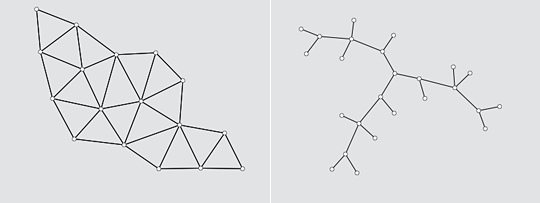
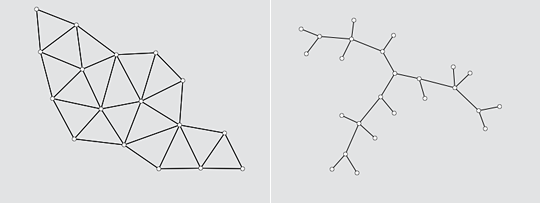
Stadler goes on to describe how the Internet is constructed through a network consisting of flows and nodes – an interdependent, dynamic relationship, subject to change, with high velocity whose existence is determined by differentiation (2005). This concept was initially difficult for me to grasp as the visual diagrams did not translate into an explanation of how the Internet phenomenon mechanically produces structured networks which spit out the right information on the right platforms at the right time! Yet upon reflection the idea of the Internet in general is a complex enough marvel to wrap ones head around. So the idea of flows and nodes, and there tendency to carry information across the globe will have to suffice at this time. 


Sterling, B. (1993) 'A Short History of the Internet', The Magazine of Fantasy and Science Fiction [URL: http://sodacity.net/system/files/Bruce_Sterling_A_Short_History_of_the_Internet.pdf]

Stalder, F. (2005) 'Information Ecology'. In Open Cultures and the Nature of Networks pp. 62-66 [URL: http://felix.openflows.com/pdf/Notebook_eng.pdf]